

¿Cuánto dolor se entrega en una obra?
Hoy, durante mi proceso de bordado de una de mis piezas, reflexionaba sobre todo lo que un artista entrega en una obra y que, a lo mejor, muchos no ven, sienten o hablan.
Bordar sobre un lienzo texturizado (con pasta y gel para modelar, en mi caso) o cartón, que son dos de los materiales que más uso para bordar, implica un poco más de fuerza de los dedos y de las manos. Las herramientas ayudan, claro que sí —dedales, pinzas, protectores de silicona—, pero no sustituyen el esfuerzo de las manos.
El rastro de cada puntada queda marcado en la curvatura que se va pronunciando en mi pincel, que es mi aguja.
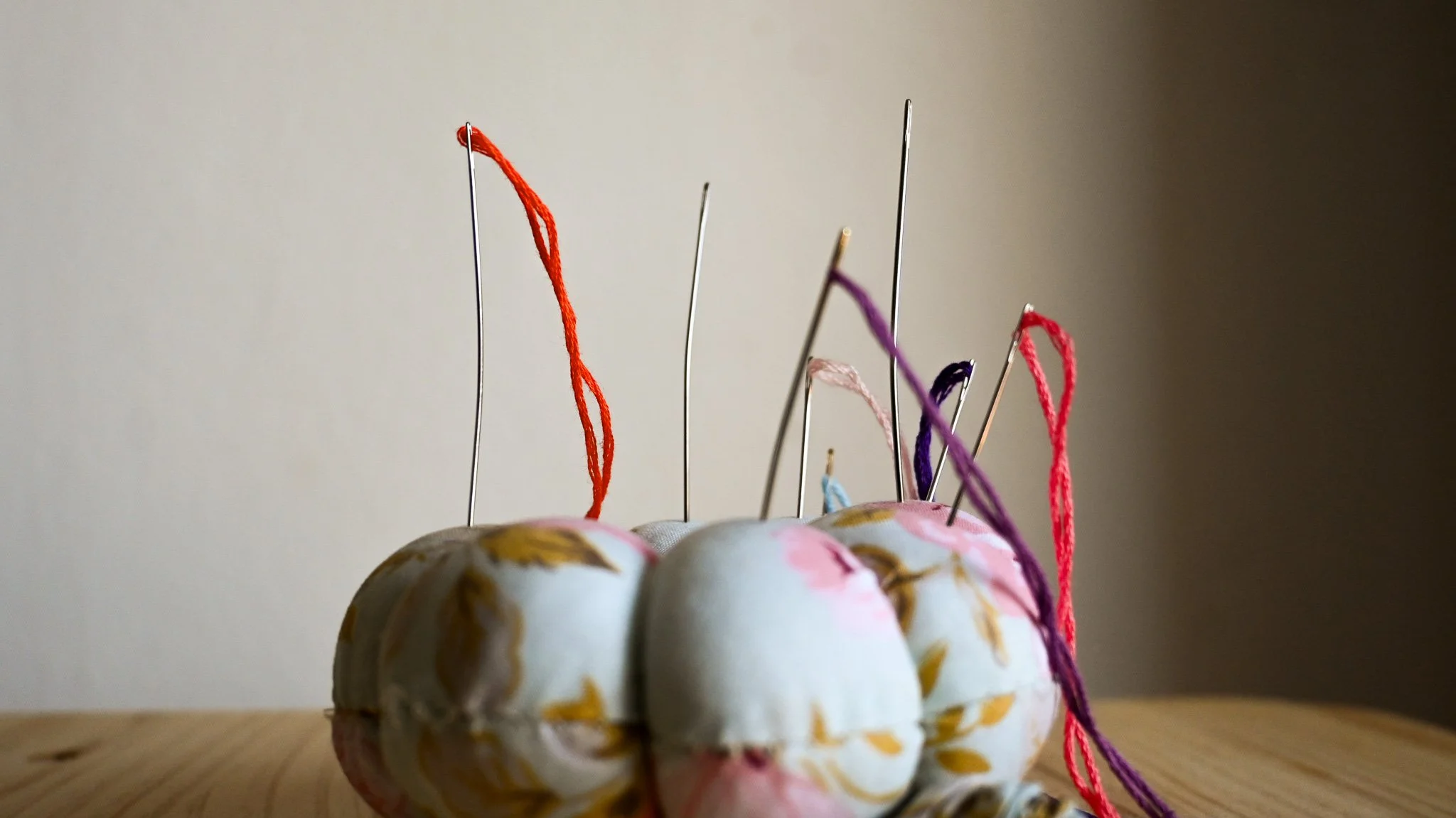
Aunque disfruto el proceso, disfruto ver en lo que se está convirtiendo lo que imaginé en mi cabeza, mis dedos, después de un rato de tirar del hilo, presionar y jalar la aguja, lloran.
Ese dolor no puya el alma, la alimenta.
Diferente a otros dolores, este me recuerda que en cada puntada estoy viva. Y así mismo lo está mi obra.
How much pain goes into a work of art?
Today, while embroidering one of my pieces, I was reflecting on everything an artist gives to a work of art, and how perhaps much of it is not seen, felt, or talked about.
Embroidering on a textured canvas (with modeling paste and texture gel, in my case) or cardboard, which are two of the materials I use most for embroidery, requires a little more strength from the fingers and hands. Tools help, of course —thimbles, tweezers, silicone finger protectors—, but they don’t replace the effort of the hands.
The trace of every stitch remains marked in the curve that becomes more pronounced in my brush, which is my needle.
Although I enjoy the process, I enjoy seeing what I imagined in my head slowly becoming something real, my fingers, after a while of pulling the thread, pressing and pulling the needle, begin to ache.
That pain doesn’t pierce the soul; it feeds it.
